
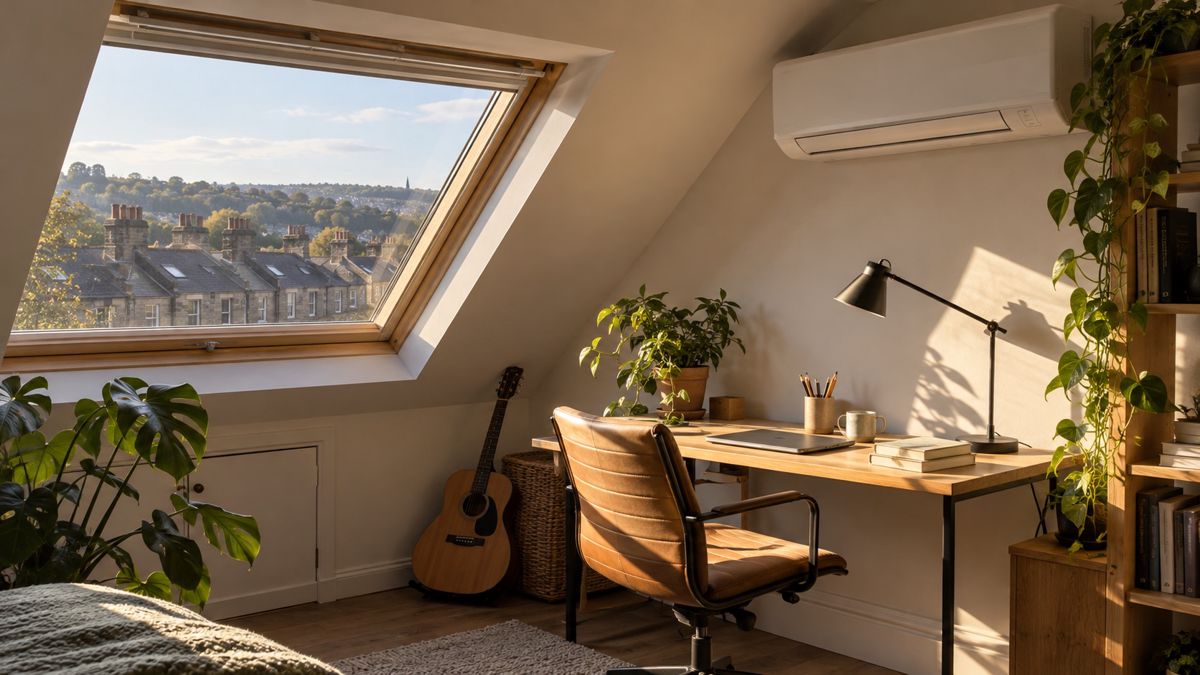
The short answer is that it depends on the type of system, and true central air conditioning is uncommon in British homes. Most Sheffield households that want cooling choose a split system with a wall-mounted unit in one or more rooms. As a rough guide, one room often costs a couple of thousand pounds fitted, and a whole home costs a good deal more. This article explains why, so you can read quotes with confidence.
All figures below are broad market guides for the UK, not quotes from this business or an offer of any kind.
Is central AC common in Sheffield homes?
No. In the United States, central air conditioning with ducts through the house is the norm. In Sheffield, most houses are stone or brick terraces, 1930s semis and post-war estates, built without duct space. Winters are cold and summers are mild, so for decades nobody needed cooling.
That is changing slowly. Loft conversions, south-facing extensions, home offices and bedrooms under slate roofs can get uncomfortable in a heatwave. People who want relief usually look at three options.
- Single split system. One indoor unit and one outdoor unit, for one room.
- Multi-split system. One outdoor unit feeding two or more indoor units.
- Ducted system. Hidden ducts in a loft or ceiling void, closest to what Americans call central AC.
What does a new air conditioning system cost?
Prices vary with the installer, the equipment and the building. These are widely quoted rough ranges across the UK, and Sheffield prices are generally in line with them.
- A single-room split system, supplied and fitted, is often somewhere around £1,500 to £3,500.
- A multi-split serving several rooms commonly runs from about £4,000 to £9,000 or more.
- A ducted whole-home system is usually the most expensive, often £8,000 to £15,000 or more, if the building has space for it.
Treat these as a rough guide only. A small unit on an easy wall costs far less than a long pipe run through a stone terrace to a rear yard. If a quote is far below or above these ranges, ask the installer to explain why.
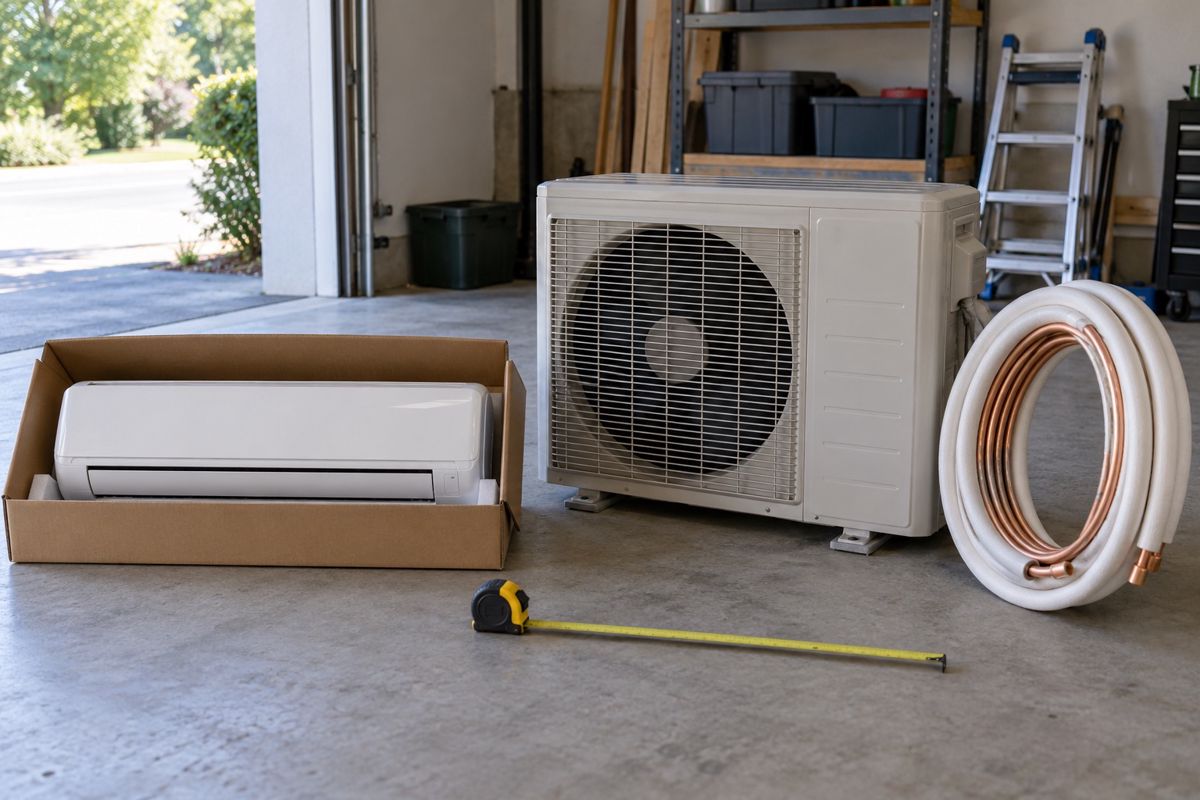
What changes the price of air conditioning?
Two homes that look the same can get very different quotes. These are the usual reasons.
Size and number of rooms
A bedroom often needs a small unit, while a large open-plan lounge needs far more capacity. Oversizing wastes money and makes the room feel clammy. Undersizing never keeps up. A good installer measures and asks about windows, insulation and how the room is used.
Brand and efficiency
Equipment from well-known makers costs more than budget brands, and more efficient models usually cost more up front. They can use less electricity over time.
Pipe runs and wall type
The longer the distance between the indoor and outdoor unit, the more pipe, labour and cost. Drilling through solid stone takes longer than cavity brick. Outdoor units on first-floor walls or roofs need brackets and sometimes extra access equipment.
Electrical work
The unit needs a safe supply. If your consumer unit is full or old, extra electrical work adds to the bill.
Heating as well as cooling
Most modern split units are reversible and can heat a room as well. That can add some cost, but it makes the unit useful year-round.
What about running costs and heating?
Air conditioning runs on electricity, and the cost depends on your tariff, the size of the unit and how often you use it. Because Sheffield summers are mild, most households only run cooling for a few weeks a year, so running costs tend to be small compared with heating.
Reversible units are more interesting in winter. They work as air-to-air heat pumps and can heat a single room efficiently. They are not a replacement for a whole-house boiler system, but they can help in loft rooms or extensions that your radiators struggle to reach. If you are thinking bigger, a full air source system is covered on our heat pump installation page.
Servicing also affects running costs. Dirty filters and coils make the unit work harder. A yearly check keeps it efficient and spots small faults early.
Do I need permission to fit air conditioning?
Often not, but check. In England, many domestic units can be installed without planning permission as permitted development, subject to conditions about position and size. Listed buildings and homes in conservation areas are treated more strictly, and Sheffield has several conservation areas, including parts of Nether Edge.
- If you rent, ask your landlord before drilling the wall.
- If you are a leaseholder in a flat, check your lease and speak to the managing agent.
- Think about neighbours. An outdoor unit near a bedroom window can cause noise complaints.
- Contact the council if you are unsure whether your property has extra controls.
The person fitting the system must be competent to handle refrigerant, which in the UK needs specific certification. Ask to see their qualifications and the manufacturer's warranty terms.
How do I compare quotes?
Ask every installer to quote for the same job so you can compare fairly. A good written quote should say:
- The make, model and capacity of each unit.
- The position of the indoor and outdoor units and the length of the pipe run.
- What electrical work is included.
- How the condensate drain is handled.
- What warranty applies and how servicing works.
- What is not included, so there are no surprises.
Be careful with quotes given without a visit. It is hard to price a stone-walled loft room from a photo alone. Take your time, and do not feel pressured by deadlines or one-day offers.

Where should I start?
Start by working out which rooms really need cooling and whether you would also like some heating from the same unit. Then talk to a local installer who can come and look at the space. Our air conditioning installation page explains what a fitting involves in a Sheffield home, and you can send a short form from there. If you already have a system that has stopped working, check our AC repair page before deciding to replace it.